3 Moments of Joy a Day – KDP Interior: A Practical Tool for Gratitude Journal Publishing
Publishing a journal on Amazon KDP can be surprisingly demanding. The technical requirements—proper bleed settings, page counts, file formatting—often overshadow the creative vision. For anyone looking to produce a gratitude journal that actually resonates with readers, the underlying template needs to be solid, reliable, and thoughtfully structured. 3 Moments of Joy a Day – KDP Interior offers exactly that: a ready-to-upload PDF designed for a six-month daily gratitude practice, packaged with customization files that give publishers genuine control. This article evaluates the template on its practical merits, usability, and long-term value for KDP publishers.
What is 3 Moments of Joy a Day – KDP Interior?
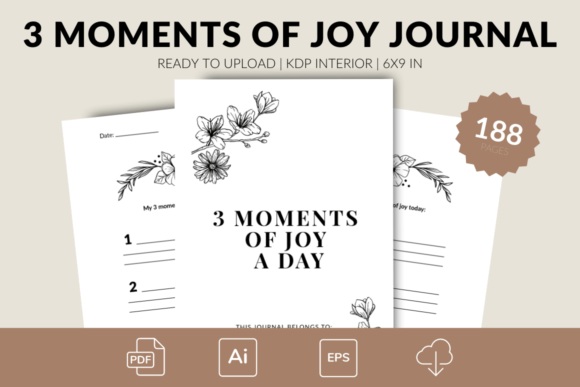
At its core, this is a complete interior template for a 6x9 inch journal, spanning 188 pages that cover a six-month period. Each day provides space to record three moments of joy—a simple but effective structure that encourages consistent gratitude reflection. The template is delivered as a high-quality PDF ready for upload to Amazon KDP, but it also includes source files in AI and EPS formats, along with a cover template in PNG, AI, and EPS. A copyright text section is included to help protect your published work.
What sets this apart from a generic PDF is the combination of tested compatibility and customization flexibility. It is not a one-size-fits-all file; it is a foundation you can adjust, rebrand, or repurpose. For publishers who value both efficiency and creative control, that distinction matters.
Key Characteristics That Define Its Practical Value
Understanding what makes this template worth considering requires looking beyond the surface features.
No Bleed Setup Saves Time and Reduces Errors
One of the most common pain points for new KDP publishers is getting bleed settings right. A journal that requires full bleed can introduce layout shifts, trimming issues, or outright rejection during KDP's review process. 3 Moments of Joy a Day is designed with no bleed, meaning the content area stays within safe margins. This simplifies the upload process and reduces the likelihood of formatting errors. For anyone who has spent hours troubleshooting print margins, this alone is a significant practical advantage.
Optimized for Amazon KDP Compatibility
The template has been tested and optimized specifically for the KDP platform. This is not a generic design adapted after the fact; it was built with Amazon's requirements in mind. File dimensions, resolution, and structure all conform to KDP specifications. When you upload the PDF, you are working with a file that has already been validated for the platform, which streamlines the review process. For publishers managing multiple titles, this reliability translates directly into time saved.
188 Pages Covering a Six-Month Span
The 188-page count positions the journal as substantial enough to feel like a meaningful product, without being so long that production costs become prohibitive. Six months is a realistic timeframe for a daily gratitude practice. Readers can commit to the exercise without feeling overwhelmed by a year-long expectation, and publishers benefit from a product that encourages repeat purchases—many users will return for a second volume after completing the first.
Customization Through Source Files
Not every publisher wants a completely turnkey solution. Some need to adjust fonts, modify prompts, or change layout elements to align with their brand. The inclusion of AI and EPS source files gives you full control over the design. If you want to change the header font, adjust spacing, or add your own logo, you can do so using Adobe Illustrator or compatible software. This flexibility is especially valuable for publishers with an established visual identity who need the interior to match their existing product line.
Usability and Workflow Considerations
When evaluating any KDP resource, workflow integration matters. How easily does this template fit into your existing publishing process?
The primary deliverable is a high-quality PDF that is ready to upload. For most publishers, this means you can go from purchase to listing in a matter of hours, assuming you have your cover ready and your product description written. The no-bleed setup means no last-minute margin adjustments. The page count is already optimized for KDP's printing costs, so there are no surprises when you calculate your royalties.
If you choose to customize the template using the AI or EPS files, you will need basic proficiency in vector editing software. The files are well-organized, but they are not simplified for absolute beginners. This is a realistic assessment: if you have never opened Illustrator, you will need to learn the basics or work with a designer. For publishers who already have those skills, the customization process is straightforward and efficient.
The cover template in PNG, AI, and EPS formats provides a cohesive starting point. However, creating a compelling cover that sells on Amazon still requires thoughtful design—the template gives you a structure, but the visual appeal ultimately depends on your execution. Publishers who rely heavily on cover design as a selling point should treat this as a foundation, not a finished product.
Who Benefits Most from This Template?
Not every publisher needs the same level of flexibility. Understanding where 3 Moments of Joy a Day fits best helps you decide if it aligns with your goals.
Independent Publishers and Self-Publishers
If you are building a line of journals under your own brand, this template offers a strong starting point. The six-month format is popular for gratitude and wellness products, and the tested KDP compatibility removes a major technical hurdle. You can focus on branding, marketing, and positioning rather than troubleshooting file issues.
Freelancers and Designers Creating Client Work
For designers who produce journals for clients, the source files are a significant asset. You can modify the template to match a client's brand guidelines, adjust the layout for different paper sizes, or repurpose the structure for other types of guided journals. The copyright text section also helps ensure proper attribution, which is useful when handing off files to clients.
Creators and Bloggers Expanding Into Physical Products
If you have an audience interested in mindfulness, gratitude, or personal development, a journal can be a natural extension of your content. This template allows you to create a physical product that complements your existing work. The six-month format gives your audience a reason to engage daily, and the simple three-moment structure is accessible to beginners who may be new to gratitude journaling.
Educators and Small Business Owners
Workshop facilitators, coaches, and small business owners who want to offer a tangible takeaway can use this template to create branded journals. The flexibility to customize the interior means you can include your own prompts, resources, or contact information. The no-bleed setup keeps printing costs predictable, which matters when ordering in bulk.
Real-World Performance and Long-Term Value
How does this template hold up once it is live on Amazon? A few factors determine its real-world effectiveness.
First, the daily format encourages habit formation without being prescriptive. Recording three moments of joy is a low-barrier exercise. Users do not need to write lengthy reflections; they simply note three positive experiences. This simplicity supports long-term adherence, which in turn drives positive reviews and word-of-mouth recommendations. Journals that feel burdensome tend to collect dust. Journals that feel manageable get used.
Second, the 188-page count positions the product competitively. At a 6x9 inch trim size, this is a substantial book. Readers perceive value from the weight and thickness, and the six-month duration feels like a complete journey. From a pricing perspective, you can set a price point that reflects the perceived value while maintaining healthy margins, especially given the optimized page count for KDP printing costs.
Third, the customization flexibility extends the product's lifespan. If you decide to create a series—volume one, volume two, or a themed version—the source files allow you to iterate quickly. You are not locked into a single layout. You can refine your design based on customer feedback, adjust the aesthetic for different audiences, or seasonal editions. This reduces the need to purchase a new template for every variation.
Possible Limitations and Considerations
No resource is without constraints, and being transparent about them helps you make an informed decision.
Cover design remains your responsibility. While a cover template is included, it provides structure and dimensions, not a finished, market-ready cover. If you lack design skills, you will need to hire someone or invest time in learning. The interior template is robust; the cover is a starting point.
Customization requires software knowledge. The AI and EPS files are not editable in free tools like Canva. If you want to modify the interior, you need access to Adobe Illustrator or a compatible vector editor. For publishers who prefer fully turnkey solutions, the ready-to-upload PDF is sufficient, but the customization potential remains locked behind a software requirement.
The three-moment structure may feel too simple for some users. While this simplicity is a strength for many, experienced journalers or those seeking more guided prompts might find it lacking. If your target audience expects deeper reflection exercises or more varied prompts, you may need to modify the layout to include additional elements. The template's flexibility allows for that, but it requires effort on your part.
Practical Recommendations for Getting the Most Out of This Template
- Start with the ready-to-upload PDF for your first release. Test the market response before investing time in customization. The PDF is production-ready, so you can launch quickly and gather feedback.
- Use the source files to create a cohesive brand series. Once you understand your audience's preferences, apply consistent fonts, colors, and layout adjustments across multiple journal titles.
- Pair the journal with a complementary low-content product. Consider offering a gratitude notebook, a monthly review journal, or a weekly planner that shares the same design DNA. Cross-promotion can increase visibility and average order value.
- Leverage the copyright text section to establish ownership. Ensure your copyright information is clear and correctly attributed. This is especially important if you plan to publish under a brand name or business entity.
- Test the upload process with a draft listing first. Even though the template is optimized for KDP, it is good practice to preview the file in KDP's online viewer and order a proof copy before publishing widely.
Assessing the Fit for Your Publishing Goals
Choosing the right interior template comes down to matching the resource to your workflow, audience, and long-term plans. 3 Moments of Joy a Day – KDP Interior serves publishers who value tested reliability, customization potential, and a product structure that supports consistent reader engagement. The six-month format is well-suited for gratitude journals, and the no-bleed design simplifies the publishing process significantly.
If you are looking for a template that balances ease of use with creative control, this is a practical choice. It removes the most common technical obstacles while giving you room to make the product your own. Whether you are publishing your first journal or expanding an existing line, the combination of ready-to-upload files and editable source files provides both efficiency and flexibility.
The gratitude journal market continues to grow as more people seek structured ways to practice mindfulness and positivity. A well-designed interior that supports daily use without overwhelming the reader can stand out in that space. This template provides the structure; the success of the final product depends on how effectively you brand, market, and connect with your audience. For publishers ready to move past the technical hurdles and focus on creating a meaningful product, it is a resource worth integrating into your publishing workflow.