Math Activity Book for KDP V-1 – Creative Ideas for Publishers
If you’re looking to create or expand your line of educational products, a well-structured activity book can be a reliable foundation. The Math Activity Book for KDP V-1 offers exactly that: a ready-made set of exercises designed to build early math skills while keeping young learners engaged. Whether you’re an experienced self-publisher or just starting your journey on Amazon KDP, this resource gives you a flexible starting point that you can adapt to different goals and audiences.
What Is the Math Activity Book for KDP V-1?
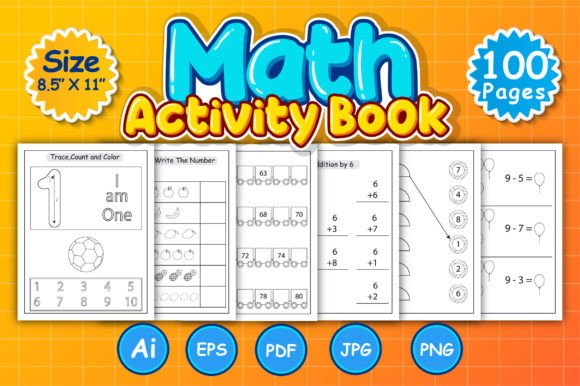
This activity book is a complete package for children who are beginning to explore numbers and basic arithmetic. It contains 100 pages of exercises that progress from simple number recognition to early addition and subtraction. The contents include:
- Number tracing practice
- Counting and writing numbers
- Fill-the-missing-numbers activities
- Number mazes
- Addition problems
- Match-the-correct-number tasks
- Subtraction exercises
Along with the printable PDF and standard image formats (PNG, JPG), you receive fully editable AI and EPS files. The book is sized at a convenient 8.5″ x 11″ with no bleed, making it straightforward for print-on-demand services. This combination of content and file flexibility makes the Math Activity Book for Kids V-1 a versatile asset for anyone creating educational materials.
Why This Activity Book Works for Multiple Audiences
The real strength of this resource is its adaptability. It isn’t limited to one type of user. Here’s how different creators and professionals can make it their own:
- Self-publishers – You can upload the ready-to-print PDF directly to KDP, or you can customize the editable files to create a series of themed books (e.g., animal math, space math, or seasonal editions).
- Educators and tutors – Use the pages as supplemental classroom material for kindergarten or first grade. The variety of exercise types helps reinforce number sense without needing to design worksheets from scratch.
- Parents and homeschoolers – Print pages at home as needed. The gradual difficulty curve supports children who need extra practice with number formation and counting.
- Graphic designers and content creators – The editable AI and EPS files allow you to tweak colors, add branding, or combine pages with other activities to create unique bundles.
Creative Ways to Use and Adapt the Activities
While the base content is already useful, you can extend it in several directions to reach different audiences or to refresh your product line:
Combine Tracing with Storytelling
The number tracing sections are straightforward, but you can add a narrative layer. For example, insert small illustrations or short prompts like “Trace the number and draw that many apples on the tree.” This turns a simple tracing exercise into a mini creative task, making it more engaging for children while still building fine motor skills.
Transform Number Mazes into Logic Puzzles
The number mazes in the book are designed to help kids recognize numerical order. You can expand on this by creating additional mazes where the correct path requires counting by twos or fives. For publisher who want a differentiated product, you could release a “Number Maze Challenge” book using the same maze templates but with harder sequences.
Build a Themed Series
Since the files are fully editable, it’s easy to change the theme of the entire book. Replace generic clipart with ocean animals, dinosaurs, or fairy tale characters. Keep the same exercise structure but adjust the visual style. This allows you to produce multiple books targeting the same age group while keeping your catalog fresh and avoiding repetition.
Integrate the “Match the Correct Number” Section into Memory Games
Those matching pages can be repurposed into a printable card game. Cut out the number and object pairs, and you have a simple memory or matching activity. You can include instructions in your book’s front matter or offer a separate bonus file. This adds perceived value and encourages parents to interact with the book beyond just completing pages.
Tips for Customizing Your Own Math Activity Book
Working with the editable AI and EPS files gives you creative control. To keep your output clean and professional, consider these practical points:
- Stick to the no-bleed layout – The 8.5″ x 11″ size with no bleed is ideal for print-on-demand. If you redesign the interior, ensure margins and safe zones remain consistent to avoid cutting off content.
- Choose a clear, readable font – For number tracing, use a dotted or dashed font that clearly shows the writing path. For body text, a simple sans-serif like Arial or a child-friendly rounded font works well.
- Maintain progression – The original order (tracing → counting → missing numbers → mazes → addition → matching → subtraction) builds skills logically. If you add new pages, keep that sequence so children don’t get confused.
- Use consistent visual cues – If you add icons or images, keep the style uniform throughout. Mixing cartoon and realistic styles can be distracting. Decide on a simple, clean look and apply it across all pages.
Keeping Content Clear and Learner-Friendly
Educational activity books need to be intuitive for both children and adults. Here are a few guidelines to ensure your adaptation remains effective:
- Label sections clearly – Use headings like “Number Tracing” or “Let’s Add!” so parents and teachers can easily navigate the book.
- Limit visual clutter – Young children focus best with ample white space. Don’t crowd the page with too many instructions or decorations.
- Provide answer keys for math sections – A small answer key at the back helps adults quickly check work. This is especially useful for the addition and subtraction pages.
- Include a progress page – Add a simple chart or sticker page where kids can mark completed activities. This adds a sense of accomplishment and encourages them to finish the book.
Practical Examples for Different Goals
To illustrate how versatile this resource can be, here are three realistic scenarios:
Scenario 1: A new KDP publisher launching their first title. Use the provided PDF as-is. Upload to Amazon with a simple cover created from the included JPG assets. Focus on keyword research around “preschool math” and “number tracing workbook.” Because the content is tested and structured, you can validate the market before investing time in customization.
Scenario 2: An educator building a supplementary learning pack. Take the counting and missing numbers pages from the editable files. Copy them into a new document and add a seasonal theme (e.g., winter numbers). Print a classroom set. The consistent exercise format means students already know what to do, saving instruction time.
Scenario 3: A freelance designer creating a custom workbook for a client. Use the AI file to adjust colors to match the client’s brand. Replace the generic number maze with a maze that spells out the age number (e.g., a path that forms a “5” for a 5-year-old’s workbook). Offer the client the editable files as part of the package, adding value to your service.
Moving from Idea to Published Product
With the Math Activity Book for KDP V-1, the transition from concept to market-ready item is streamlined. Because the files are already high-resolution and fully editable, you can spend your time on the creative parts: designing a compelling cover writing a solid product description, and choosing the right categories on Amazon. Remember, the best activity books are those that balance educational value with ease of use. This resource already achieves that balance – your job is to present it to the right audience.
If you’re new to self-publishing, start with the PDF as is and learn the platform. If you have a growing catalog, use the editable files to experiment with new themes and formats. The 100-page count gives you plenty of material to work with, and the inclusion of subtraction and addition at the end means children can grow with the book. Keep your designs clean, your instructions clear, and your focus on the learner. That approach will serve you well whether you’re creating for your own children, your classroom, or a global marketplace.