Your Complete Guide to the 2024 Therapy Journal Canva Template for Digital Self-Care and Reflection
Journaling has long been recognized as one of the most accessible and effective tools for mental wellness. In 2024, the practice has evolved far beyond a simple spiral notebook and pen. With the rise of digital design platforms like Canva, you can now create a personalized therapy journal that fits your exact needs—without needing any graphic design experience. The 2024 Therapy Journal Canva Template offers a ready-made, fully customizable solution that empowers you to track your mental health, build self-awareness, and cultivate mindfulness. Whether you are a therapist looking for client resources, a journaling enthusiast, or someone exploring self-care for the first time, this template provides a structured yet flexible framework to support your journey.
What Is the 2024 Therapy Journal Canva Template?
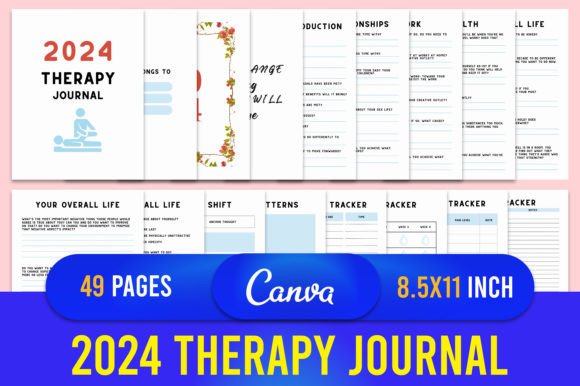
The 2024 Therapy Journal Canva Template is a complete, 49-page digital journal designed to be edited and personalized using a free Canva account. It is not merely a collection of blank pages; it is a thoughtfully curated set of tools that address the key areas of mental, emotional, and physical well-being. From tracking your mood and habits to exploring thought patterns and practicing grounding techniques, every page serves a clear purpose. The template is optimized for print, with CMYK color, 300 DPI resolution, and a standard 8.5 x 11-inch trim size, making it ready for both at-home printing and professional publishing through platforms like Amazon KDP.
What sets this template apart is its blend of structure and flexibility. You can edit the text, colors, fonts, and layout directly in Canva—no advanced software required. Once you are satisfied, you can export high-quality PDF or JPEG files to use digitally or in print. The result is a journal that feels uniquely yours, aligned with your personal goals or therapeutic needs.
Who Can Benefit from This Therapy Journal Template?
This resource is designed for a wide audience. Individuals managing anxiety, depression, or daily stress can use it to monitor symptoms and celebrate small victories. Therapists and counselors can incorporate it into their practice as a structured tool for clients to use between sessions. Journaling beginners will appreciate the guided prompts, while experienced journal keepers will find the advanced trackers and reflection pages a valuable addition to their routine. Content creators, coaches, and wellness bloggers can also use the template as a lead magnet, digital product, or print-on-demand offering for their audience.
Complete Checklist of Pages and Features
The template includes 49 pages, each designed to address a specific aspect of mental health and daily life. Below is a breakdown of every page and how it contributes to a comprehensive therapy journaling experience.
Core Organizational Pages
- Belongs to Page – Personalize the journal with your name or the recipient's name. A simple but meaningful touch that establishes ownership.
- Contact List – Keep important phone numbers and contacts handy, including your therapist, doctor, or emergency contacts. This page can be a lifeline during difficult moments.
- Password Tracker – A secure place to record passwords for your online accounts, especially useful if you use digital therapy apps, telehealth portals, or mindfulness platforms.
- Notes – Blank lined pages for free-form journaling, brainstorming, or capturing spontaneous thoughts.
- 2024 Calendar – An annual overview to mark important dates, appointments, therapy sessions, or recurring events. Helps you see the big picture at a glance.
- To-do List – Prioritize tasks and break down overwhelming responsibilities into manageable steps.
Therapy and Relationship Pages
- Therapy Introductions – A dedicated space to record your therapist's name, contact details, session frequency, and goals for therapy. Ideal for new clients or those starting with a new provider.
- Your Relationship – Reflect on romantic, familial, or platonic relationships. Prompts guide you to explore communication styles, boundaries, and areas for growth.
- Your Work – Examine your professional life, including stressors, achievements, and work-life balance. This page helps you separate professional challenges from personal ones.
- Your Health – Track physical health concerns, doctor visits, lab results, and wellness goals. Recognizes the deep connection between physical and mental health.
- Your Overall Life – A holistic check-in that invites you to rate satisfaction across different life domains: social, emotional, financial, spiritual, and more.
Mindset and Emotional Tracking
- Mindset Shift – Document limiting beliefs and reframe them into empowering thoughts. A core cognitive behavioral therapy (CBT) technique made simple.
- Worry Patterns – Identify recurring worries, their triggers, and their intensity. Recognizing patterns is the first step toward managing anxiety.
- Medications Tracker – Log medication names, dosages, times taken, and any side effects. Essential for anyone managing psychiatric or chronic medications.
- Water Tracker – A simple hydration log. Dehydration can affect mood, energy, and cognitive function—this page builds a healthy habit.
- Symptom Tracker – Record physical or emotional symptoms (headaches, fatigue, irritability, etc.) on a daily basis. Helps identify triggers and measure progress.
- Sleep Tracker – Monitor hours of sleep, quality, and disturbances. Sleep is foundational to mental health, and this page makes it easy to spot trends.
- Yearly Mood Tracker – A 12-month overview to see mood patterns across seasons and life events. One glance reveals your emotional landscape over the entire year.
- Mood Tracker – A more granular daily or weekly mood log. Use color coding, emojis, or numeric scales to record how you feel each day.
- Habit Tracker – Build positive habits (exercise, reading, meditation) and break negative ones. The tracker provides visual reinforcement for consistency.
Safety, Reflection, and Coping Tools
- My Safety Plan – A critical page for anyone experiencing suicidal thoughts, self-harm urges, or severe distress. Includes warning signs, coping strategies, and emergency contacts. If you or someone you know is in crisis, call or text 988 (in the US) or your local crisis line immediately.
- Monthly Reflection – At the end of each month, look back on highs, lows, lessons learned, and goals for the month ahead. Encourages a growth mindset.
- Anxiety Log – Record anxious episodes, their intensity, duration, and what helped you cope. Over time, you will see what works and what exacerbates anxiety.
- Thinking Patterns – Identify cognitive distortions such as all-or-nothing thinking, catastrophizing, or personalization. Counteract them with balanced thoughts.
- Grounded Breathing Technique – A step-by-step guide to a grounding exercise, often used in mindfulness and trauma-informed care. Practice it during moments of overwhelm.
- Self-Care Reflections – Prompts to evaluate your self-care routines and identify what replenishes your energy. Self-care is not indulgence; it is a necessity.
- List of Emotions – A comprehensive vocabulary of feelings (joy, anger, shame, hope, etc.) to help you articulate your emotional state with precision. Many people struggle to name their emotions—this list is a valuable reference.
How to Edit the Template Using a Free Canva Account
One of the most appealing aspects of this therapy journal template is its accessibility. You do not need a paid Canva subscription or any design skills. Here is a step-by-step guide to getting started.
Step 1: Access the Template
When you purchase or receive the template, you will be given a Canva link. Click that link to open the template in your browser. Important: To keep the original link active and preserve the master copy, always make a copy in your own Canva account before making any edits. On the template page, look for the button that says "Use template" or "Make a copy." This action creates a duplicate that you can modify freely without affecting the original.
Step 2: Explore the Pages
Once you have your own copy, you will see all 49 pages listed in the left sidebar. Scroll through to familiarize yourself with the layout and content. Each page is fully designed with text placeholders, color schemes, and graphic elements.
Step 3: Customize the Content
Click on any text box to edit the words directly. You can change prompts, add your name, adjust questions, or rewrite instructions to suit your voice. Use the top toolbar to modify font styles, sizes, and colors. Canva offers hundreds of free fonts, so you can create a look that feels authentic to you.
Step 4: Adjust the Visual Design
If you want to change the color palette, click on any element and select a new color from the options. You can also upload your own images or choose from Canva's vast library of free photos and illustrations. The template uses a clean, therapeutic design that is intentionally calming, but you are free to make it as vibrant or minimal as you prefer.
Step 5: Download Your Finished Journal
When you are satisfied with your edits, click the "Share" button in the top right, then select "Download." For print-ready files, choose PDF Print (which includes crop marks and high resolution) or JPEG for digital use. The template is set at 300 DPI and CMYK color, ensuring professional-quality output for Amazon KDP or your home printer.
Why This Template Is Ready for Amazon KDP
If you are a content creator or entrepreneur looking to publish on Amazon KDP, this template is optimized for that purpose. The 8.5 x 11-inch trim size is a standard format for paperback journals on KDP. The no-bleed design means you do not have to worry about content getting cut off during printing. The CMYK color profile ensures accurate color reproduction, and the 300 DPI resolution guarantees sharp text and images. All you need to do is edit the content, export as a print-ready PDF, and upload it to KDP. If you plan to sell the journal, remember to check the license terms of the template to ensure it allows commercial use.
Practical Tips for Getting the Most Out of Your Therapy Journal
A journal is only as effective as your commitment to using it. Here are some suggestions to integrate the 2024 Therapy Journal into your daily life.
- Start small. You do not need to fill out every page on day one. Pick one or two trackers that resonate most with you and use them consistently for a week.
- Create a routine. Set aside five to ten minutes each morning or evening to update your journal. Consistency builds momentum.
- Use it digitally or in print. Try using the digital version on a tablet with a stylus if you prefer handwriting, or print it out and bind it yourself. Both approaches work.
- Bring it to therapy. Share relevant pages with your therapist to facilitate deeper discussions and track progress between sessions.
- Be honest. This journal is for your eyes only (unless you choose to share it). Write without judgment. Imperfect entries are more valuable than polished ones.
- Review regularly. At the end of each month, look back at your logs and reflections. Notice patterns, celebrate growth, and identify areas where you need additional support.
Common Misunderstandings About Therapy Journals
Some people assume that a therapy journal must be clinical, complex, or time-consuming. In reality, this template is designed to be simple, approachable, and adaptable. Another misconception is that you need a mental health diagnosis to benefit from a therapy journal. The truth is that anyone can use these tools to cultivate self-awareness, reduce stress, and improve emotional regulation. Think of it as a wellness tool, not a medical device. Finally, some users worry that they need to write lengthy entries every day. Even a single checkmark on a habit tracker or a one-word mood entry counts as meaningful engagement.
Final Thoughts
The 2024 Therapy Journal Canva Template is more than just a collection of pages—it is a structured pathway toward greater self-understanding, emotional resilience, and balanced living. Whether you are using it for personal growth, clinical support, or as a product for your audience, its 49 pages cover the essential dimensions of mental well-being. The ability to edit it easily with a free Canva account, combined with high-quality print-ready output, makes it a versatile resource for the modern world. By making a copy in your own Canva account and tailoring it to your unique needs, you create a journal that grows with you throughout the year. Start your journey today, one reflection, one tracker, and one grounding breath at a time.
If you are in crisis or need immediate support, please reach out to a mental health professional or contact a crisis helpline. Journaling is a powerful complement to professional care, not a substitute for it.