Mastering Your Week with a Grocery List Weekly Meal Planner
Managing the weekly cycle of grocery shopping and meal preparation can feel like a puzzle with too many moving pieces. Between work schedules, family preferences, and the desire to eat well, many people find themselves standing in a store aisle wondering what is for dinner. A Grocery List Weekly Meal Planner offers a structured yet flexible solution that brings order to this routine. Rather than treating meal planning as a chore, this approach transforms it into a system that supports your lifestyle, whether you cook for one or for a household of five.
How the Template Bridges Planning and Shopping
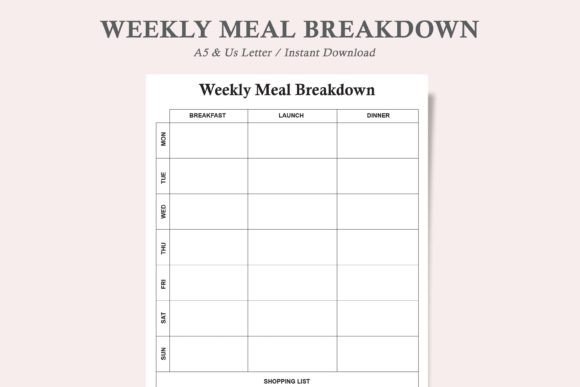
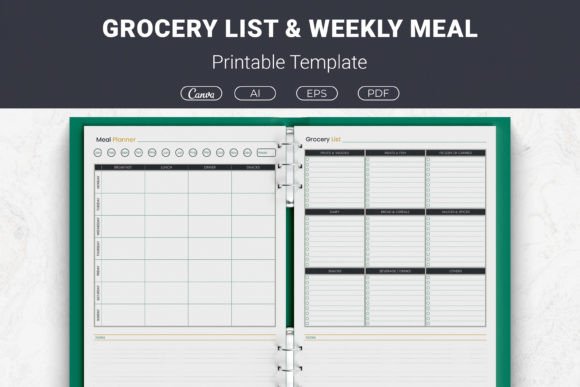
The core strength of this planner lies in its dual focus. It does not simply ask you to decide what to eat; it connects those decisions directly to what you buy. The weekly meal planner section provides dedicated space for breakfast, lunch, dinner, and snacks across seven days. This layout encourages you to think about all eating occasions, not just the main meal. When you map out a full week, you naturally start to see patterns—perhaps you tend to repeat yogurt and fruit for breakfast, or you notice that Tuesday nights are better suited for quick stir-fries than elaborate roasts.
The grocery list component then mirrors those meal choices. It is organized by food category—fruits and vegetables, meats and fish, frozen or canned goods, dairy, pantry staples, and more. This categorization is not arbitrary. It mirrors the layout of most grocery stores, which means you can move through the store methodically rather than crisscrossing aisles. By writing down precisely what each recipe requires, you reduce the likelihood of impulse purchases and forgotten essentials. The template effectively turns your weekly menu into a shopping script.
Real-World Workflow for a Typical Week
Imagine starting your planning session on a Saturday morning. You open your Grocery List Weekly Meal Planner and first fill in the dinner column for the coming week. You know Monday is hectic, so you slot a slow cooker meal. Wednesday you have a meeting that runs late, so leftovers or a quick pasta dish makes sense. Friday you feel like cooking something new, so you pick a recipe you have been wanting to try. Once the dinners are set, you add lunches, often using dinner leftovers or simple salads. Breakfasts and snacks fill in the remaining rows based on what you already know your household eats regularly.
With the meals defined, you move to the grocery list. For each dinner, you scan the ingredient list and write items under the correct category. The chicken for Monday goes under meats and fish. The broccoli and bell peppers go under fruits and vegetables. The canned tomatoes for Friday's recipe go under frozen or canned. By the time you finish, you have a complete list that covers every meal. At the store, you follow the categories and rarely need to backtrack. The entire process, from planning to shopping, becomes a seamless loop rather than separate stressful events.
Adaptability Across Different User Profiles
One of the most valuable characteristics of a Grocery List Weekly Meal Planner is its ability to serve diverse needs without requiring modification. For a busy professional, the template provides a way to batch the mental load of food decisions into a single weekly session. Instead of deciding dinner each evening when energy is low, you have already decided. For a parent managing a family, the template helps balance preferences. You can assign a column for each family member's input during planning, ensuring that everyone feels heard before the shopping happens.
For individuals with dietary restrictions, the notes section becomes a critical tool. You can record which recipes are gluten-free, which meals accommodate a low-sodium requirement, or where you need to substitute ingredients. This eliminates the risk of accidentally purchasing something that does not fit your dietary needs. The template also supports those who are exploring new eating patterns, such as plant-based eating or meal prepping for fitness goals. Because the structure is neutral, you impose your own priorities onto the framework.
Creative Professionals and Content Creators
Beyond personal use, there is a growing community of creators who use this type of planner as content for printable products. The package includes editable Illustrator files, EPS files, PDFs ready to print, and a link to Canva templates. This makes it straightforward for a designer to rebrand the template, adjust the color scheme, or add specific prompts. A creator focusing on minimalism might strip back the design to clean lines and neutral tones. Someone targeting a bullet journal audience could add dot grid elements or habit trackers alongside the meal sections.
For Kindle Direct Publishing projects, the template is sized to fit standard formats like US Letter and A4. The interior can be uploaded directly as a low-content or medium-content book. The availability of multiple sizes—including 7.5 by 9.25 inches and 6 by 9 inches—means creators can offer variety to their customers without redesigning the entire layout each time. This versatility is what allows a single template to generate multiple product listings on platforms like Amazon or Etsy.
Economic and Health Benefits Through Structure
There is a direct link between using a structured meal planner and reducing food waste. When you buy only what you have planned, you are less likely to let produce spoil in the crisper drawer or forget about canned goods in the back of the pantry. Over a month, this reduction in wasted food translates into noticeable savings. The template also encourages bulk buying of staple items that appear across multiple meals, which is typically more cost-effective than purchasing small quantities each trip.
From a health perspective, planning meals ahead of time reduces reliance on convenience foods and last-minute takeout. When you have already decided that Tuesday lunch is a grain bowl with roasted vegetables and chickpeas, you are not tempted to grab a fast-food sandwich. The act of writing down meals also makes you more mindful of nutritional balance. You can look at the week holistically and see if you have enough vegetables, whether you are relying too heavily on carbohydrates, or if you need to incorporate more protein-rich breakfasts.
Considerations for First-Time Users
Adopting a Grocery List Weekly Meal Planner requires a shift in routine. For the first week or two, the process might feel slower than your usual method. You may overestimate how much you will cook or forget to account for dining out. This is normal. The template is a tool that improves with repetition. After a few cycles, you develop a sense of how many meals you realistically need to plan and how much food your household actually consumes.
Another consideration is flexibility. Life does not always follow the planner. A last-minute invitation, a delayed workday, or a sudden craving can disrupt the best-laid menu. The template accommodates this if you treat it as a guide rather than a contract. You can swap meals between days, move unused ingredients to the next week, or simply leave a row blank if you know you will eat out. The goal is not perfection but reduction of daily friction.
Use Cases Beyond Home Cooking
While the primary audience is individuals and families managing their own kitchens, the template also serves niche scenarios. A small cooking class or workshop instructor could use the planner to prepare ingredient lists for multiple recipes across a session. A nutrition coach might provide a filled-out version to clients as a sample week of balanced eating. A community garden organizer could adapt the template to help members plan meals around seasonal harvests.
Educators teaching life skills classes, such as home economics or independent living programs, find that this type of planner introduces students to practical financial literacy. When students fill out the grocery list and then estimate costs, they learn budgeting in a concrete way. They also practice reading recipes, measuring portions, and understanding food groups—all within the framework of a single template. The planner becomes a teaching aid rather than just a personal organizational tool.
Digital and Physical Versatility
The package includes both digital source files and ready-to-print PDFs. This dual format is important because different users have different workflows. Someone who prefers digital planning can use the Canva template link to edit on their tablet or computer. They can fill in meals on screen, export the grocery list to a note-taking app, or share a read-only version with family members. Others prefer the tactile experience of printing the planner and writing by hand. The PDF files are sized for immediate printing on standard home printers or at a local print shop.
For those who use binders or disc-bound systems, the US Letter and A4 sizes punch easily into standard rings. The 7.5 by 9.25 inch and 6 by 9 inch sizes are convenient for smaller notebooks or for creators who want to offer compact planner interiors. The AI and EPS files give advanced users full control over every element. You can change fonts, adjust column widths, add or remove categories, and incorporate branding elements. This level of editability is rare in ready-made templates and is a significant advantage for creators building a product line.
Long-Term Habits and Observational Insights
Users who stick with a Grocery List Weekly Meal Planner for several months often report changes beyond just organized shopping. They develop a mental catalog of meals that work for their schedule and taste. They start to recognize which days of the week are best for cooking from scratch and which require shortcuts. They also become more attuned to their actual consumption patterns. A person might realize they consistently buy too many bananas or that they never use the second bag of spinach before it wilts. These observations feed back into the next week's plan, creating a cycle of continuous improvement.
Another observation is that the template reduces the cognitive load associated with food decisions. Decision fatigue is real, and choosing what to eat multiple times per day consumes mental energy. By offloading that decision-making to a single planning session, you free up bandwidth for other tasks during the week. The grocery list also reduces the number of decisions you make at the store. You are not comparing options or wondering if you have everything—you follow the list. This efficiency is a subtle but powerful benefit that makes the routine feel lighter over time.
Matching the Template to Your Lifestyle
There is no single correct way to use a Grocery List Weekly Meal Planner. Some people will fill it out in full detail with specific recipes. Others will use broad categories like "chicken tacos" or "salad night" and rely on improvisation. The template accommodates both approaches. The notes section can hold recipe links, prep reminders, or a running list of meals that your household enjoyed. Over weeks, this notes area becomes a personalized archive that speeds up future planning sessions.
If you share cooking responsibilities with a partner or roommate, the template serves as a communication tool. One person plans the meals, the other shops, and both know what is expected. The grocery list prevents duplicate purchases or missed ingredients. It also helps with division of labor—one person can prep vegetables on Sunday while the other cooks during the week. The structure makes collaboration explicit rather than relying on verbal agreements that get forgotten.
The availability of multiple sizes means you can choose a format that fits your carrying method. If you take your planner to the store, a 6 by 9 inch size slips into a purse or small tote. If you keep it at home on a counter, a US Letter size provides more writing space per category. The A4 size is standard for many international users and prints easily on common paper sizes outside the United States. This attention to sizing reflects an understanding that the physical experience of using the template matters as much as its content.
Ultimately, a Grocery List Weekly Meal Planner is a framework for intentionality. It asks you to pause, think ahead, and make choices that align with your priorities. Whether those priorities are saving money, eating more vegetables, reducing stress, or creating a marketable product for a print-on-demand business, the template provides the scaffold. The work of filling it in is the work of caring for yourself and your household. And that work becomes easier, week by week, as the planner becomes a familiar companion rather than a novelty.